Who Is Andrew Huberman?
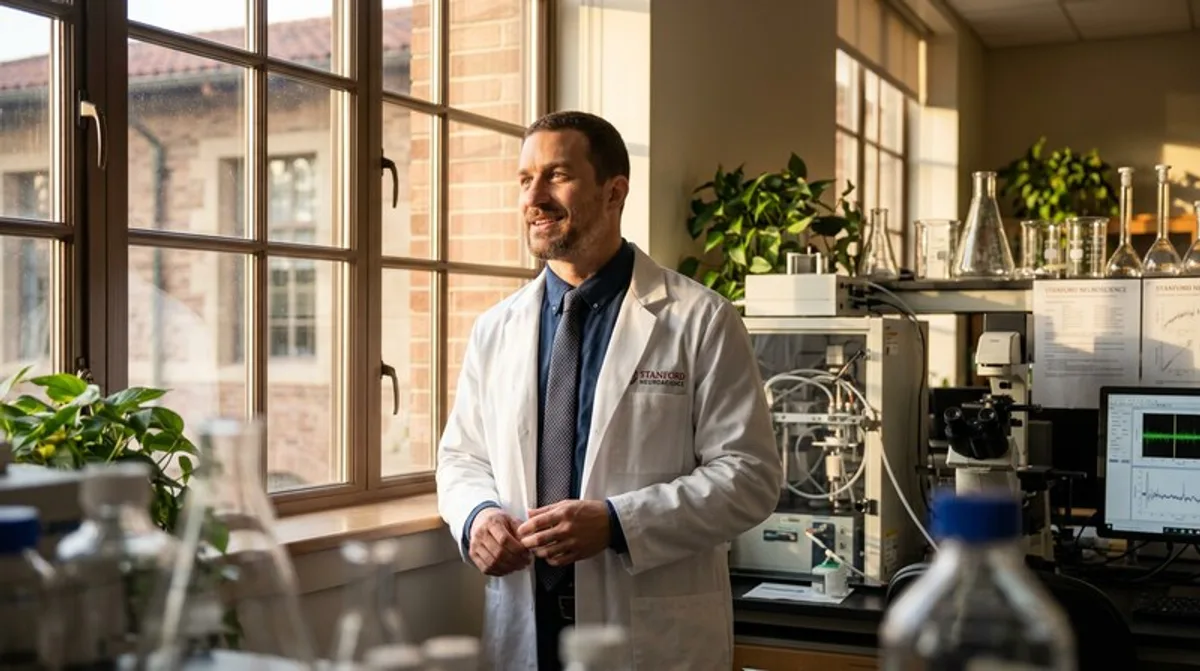
Andrew Huberman is the American neuroscientist, Stanford professor, and podcast host who built 6.5 million YouTube subscribers through a health and performance optimization content format that became one of the most commercially significant things to happen in the wellness media category since Joe Rogan proved the podcast audience for long-form expert conversation was vastly larger than anyone had assumed. Born September 26, 1975, in Palo Alto, California, he is a tenured professor at Stanford University School of Medicine's Department of Ophthalmology, whose research focuses on the neuroscience of visual perception, stress response, and learning — credentials that give his health recommendations a scientific foundation that the wellness content category had been missing, and whose specific presentation style (detailed, evidence-cited, protocol-specific) gives his audience the specific information they need to act on what they learn rather than the general inspiration most health content delivers.
Latest videos · Open channel ↗
The thing his audience specifically loves about Huberman — expressed consistently across the specific demographic of young men his content has assembled — is the actionability: every episode ends with something to do. Sleep better by getting morning sunlight. Control stress responses through physiological sighs. Optimize testosterone through specific sleep, diet, and exercise protocols. His audience does not just listen — they implement, and the community of implementation feedback that his podcast has generated is itself a content ecosystem that his original show did not have to build because his audience built it.
Origins: Stanford Neuroscience & the Huberman Lab Podcast Launch
Andrew Huberman launched the Huberman Lab Podcast in January 2021 — during a period when long-form educational audio content had found its mainstream audience through Joe Rogan's example and when the health optimization category had a growing audience but no voice combining credentialed academic research with the communication clarity that lay audiences could act on. His Stanford faculty position and active research program (his lab studies retinal ganglion cells, visual pathway plasticity, and stress neurobiology) gave his health recommendations the evidentiary foundation that self-declared wellness experts lack, and his specific gift for translating peer-reviewed research into behavioral protocols — precise enough to implement, simple enough to remember — gave his audience the actionability that most academic science communication deliberately withholds. The "get morning sunlight within 30-60 minutes of waking to set circadian rhythm" advice, which became one of the most-repeated health recommendations on social media in 2021 and 2022, is representative of his approach: it is specific, it has a mechanistic explanation rooted in actual research, and it costs nothing to try.[1]
Top Spotify Podcast, YouTube Growth & the Biohacking Mainstream
Huberman Lab became one of Spotify's most-listened-to podcasts globally within two years of launch, reaching the top positions in health and general podcast charts in the United States, United Kingdom, and Australia simultaneously — a distribution achievement that reflects both the quality of his content and the specific audience behavior his show produces: listeners who implement his protocols and share results within communities that introduce new listeners to the show through peer recommendation rather than advertising. His YouTube channel mirrors the podcast's growth trajectory, with full podcast episodes posted to YouTube alongside standalone video content, giving his audience multiple entry points to the same content ecosystem. The commercial implications of his audience's specific demographics — educated men 25–45 with above-average income and demonstrated willingness to invest in health optimization products — are reflected in his brand partnership rates, which represent among the highest in the health content category for creators at his subscriber level.[2]
Career Timeline
Brand Deals & Health Optimization Creator Economics
Andrew Huberman's estimated brand deal rate is $50,000–$200,000 per placement, reflecting 6.5 million YouTube subscribers plus one of the world's most-listened podcasts — a combined reach that commands rates typically reserved for creators with significantly larger social media followings because his specific audience demographic (educated, high-income, health-invested adult males) generates above-average conversion rates for health, supplement, technology, and premium consumer goods brands. His brand partners have included AG1 (Athletic Greens), Eight Sleep, HVMN, and other premium health optimization brands — companies whose products align with his content's specific protocols and whose target customer profile matches his audience exactly. His academic credentials create a specific brand safety advantage: he can recommend health products without the regulatory ambiguity that non-credentialed wellness creators face, and his audience trusts those recommendations with the authority they would give a trusted physician's advice. For health and wellness creator rate benchmarks, see our influencer pricing guide and brand deal negotiation guide.
Related Creators
Jordan Peterson's psychology-based self-improvement content and Andrew Huberman's neuroscience-based performance optimization content both represent YouTube's most commercially significant public intellectual formats — both serving the same core demographic of young men seeking science-backed frameworks for improving their lives, from different disciplinary foundations, and both demonstrating that credentialed expertise, communicated with clarity and actionability, builds audience loyalty that exceeds what entertainment content of equivalent reach generates. Lex Fridman's long-form interview podcast and Huberman's solo lecture podcast together represent the two dominant formats of the podcast-era intellectual content ecosystem that YouTube has hosted at scale: one through expert-to-expert conversation, the other through professor-to-audience lecture — both finding that the audience for genuinely rigorous content is larger than media had assumed.
For rates and benchmarks in this creator category, see our fitness influencer rates.
Sources
- 1 The New York Times -- Andrew Huberman and the Stanford Neuroscientist Who Became the World's Most Listened Health Optimization Podcaster (2022)
- 2 Forbes -- Huberman Lab's Ascent to Spotify's Top 10: What Happens When Academic Neuroscience Finds a Podcast Audience (2023)
Platform Statistics
Channel Growth History
| Year | YouTube Subscribers | Monthly Views | Est. Annual Earnings |
|---|---|---|---|
| 2026 | 6M | 25M | $1.2M – $4.2M |
| 2024 | 5.5M | 23M | $1.1M – $3.8M |
| 2022 | 3M | 18M | $840K – $2.6M |
| 2021 | 500K | 5M | $180K – $600K |
Data sourced from Social Blade & public estimates. Updated annually.
Estimated Sponsorship Rates
Market estimates — actual rates vary by deal structure & exclusivity
Brand Deals & Sponsorships
| Brand | Year | Deal Type | Source |
|---|---|---|---|
| AG1 (Athletic Greens) | 2021 | Podcast Sponsor | Podcast Disclosure |
| Eight Sleep | 2022 | Podcast Sponsor | Podcast Disclosure |
| ROKA | 2022 | Eyewear Sponsor | Podcast Disclosure |
Frequently Asked Questions
Andrew Huberman's real name is Andrew D. Huberman.
Andrew Huberman was born on September 26, 1975, and is 51 years old as of 2026.
Andrew Huberman's net worth is estimated at $5 million, based on platform ad revenue, brand partnerships, merchandise, and business ventures. This is an estimate — exact figures are not publicly disclosed.
Andrew Huberman is American, born in Palo Alto, California, USA.
Andrew Huberman — Official Social Media & Links
All accounts below are the verified official profiles for Andrew Huberman. Follower counts are approximate and updated periodically.
Sponsorship Rates & Booking
- Youtube: 6M followers
- Instagram: 5.5M followers
- Twitter: 3M followers