
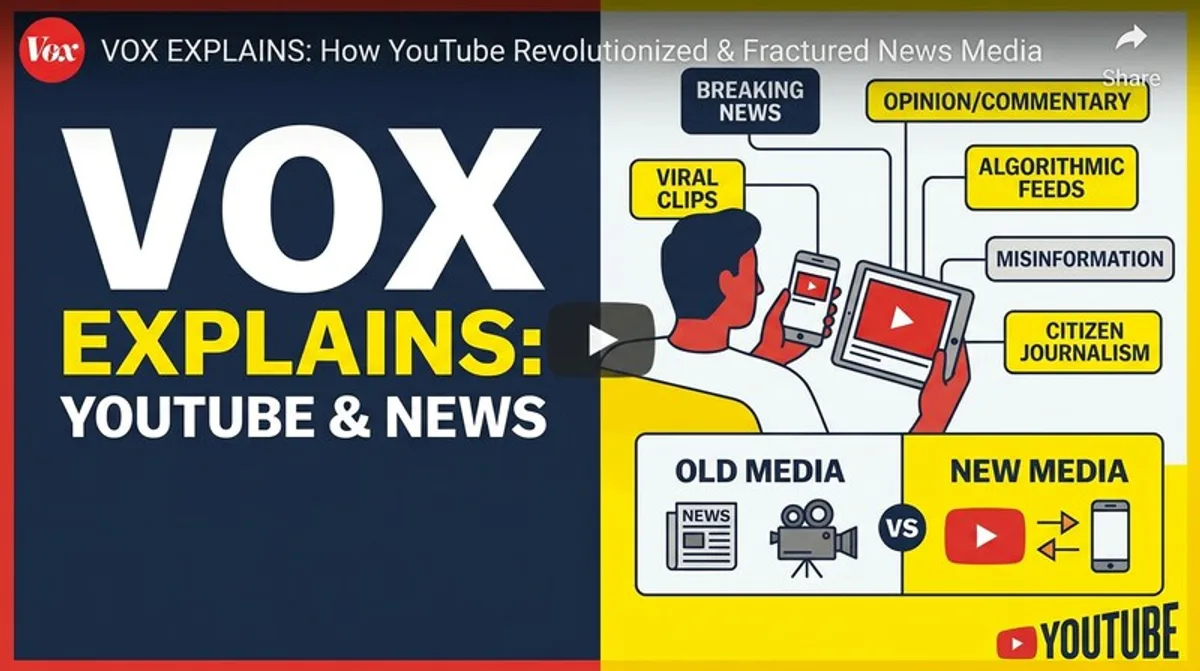
What Is Vox?
Vox is the Los Angeles and Washington, DC-based digital media company whose YouTube channel — 10 million subscribers — has built its audience on explanatory journalism: the specific editorial approach that treats the reader's or viewer's lack of context as the primary problem in news consumption, and addresses it directly rather than assuming background knowledge. Founded in 2014 by Ezra Klein, Matt Yglesias, and Melissa Bell, Vox pioneered the format that a subsequent generation of digital media companies would imitate — the contextual explainer, the data visualization, the "what you need to know about X" piece — and its YouTube channel translates that format into video through a visual approach that made card stacks, animated data graphics, and voice-over explanations the aesthetic grammar of online explainer journalism.
Latest videos · Open channel ↗
What Vox's audience specifically values about the channel is the thing its founders designed it to provide: news coverage that explains the why behind the what. Most news content tells you what happened. Vox's editorial DNA is the question that follows: why does this matter, what is the historical context, what would you need to know to actually understand this event rather than just be aware of it.
Origins: Ezra Klein, Explainer Journalism & the Card Stack Format
Vox launched in January 2014 with a founding editorial philosophy that Ezra Klein — who had built his journalistic profile at The Washington Post's Wonkblog — articulated as fixing what was broken about daily news: the assumption that the reader already knows the background context, which they rarely do. Vox's "card stacks" — persistent contextual explainers that sat alongside breaking news articles and provided the background information needed to understand why the news mattered — were the founding product innovation, and they established the editorial DNA that the YouTube channel subsequently expressed through video. The animated data visualization style that Vox's video team developed — clean typography, smooth transitions between data graphics, voice-over that explains the visual rather than narrating alongside it — became the aesthetic template for explainer video journalism globally, imitated by news organizations and independent creators who recognized that the format's clarity was not accidental but the result of deliberate production decisions about how visual information should work in journalism.[1]
Netflix "Explained," "Today, Explained" & the Explanatory Journalism Franchise
Vox's editorial brand extended into multiple distribution formats that together represent one of digital media's most successful multi-platform intellectual franchise operations: the "Explained" Netflix documentary series (2018) brought the Vox explanatory format to long-form television, with episodes on topics including cryptocurrency, monogamy, and the racial wealth gap that accumulated tens of millions of Netflix views and introduced the Vox brand to audiences who encountered it through streaming rather than digital news. "Today, Explained" — the daily news podcast hosted by Sean Rameswaram — became one of Spotify's most-played news podcasts. The YouTube channel's most-viewed content includes explainers on maps and borders, the US electoral college, and gerrymandering — topics that are discussed constantly in news coverage but rarely explained with the specificity that would allow non-specialists to evaluate what they hear. That gap — between what news assumes you know and what you actually need to know — is Vox's permanent editorial franchise, and it does not expire.[2]
Channel Timeline
Brand Deals & Explanatory Journalism Channel Economics
Vox's estimated brand deal rate is $25,000–$80,000 per placement, reflecting 10 million YouTube subscribers in the educated, politically engaged adult 25–45 demographic with above-average income and the specific consumer profile that news consumption self-selects: subscribers who watch Vox make considered, research-informed purchasing decisions and respond to brand integrations that align with their identity as informed, thoughtful consumers. Financial services, technology companies, educational platforms, book publishers, and premium consumer goods brands targeting educated liberal-leaning professionals are the primary commercial categories. Vox's editorial reputation creates a specific brand safety consideration: integrations that align with its values-driven audience profile perform well, while those that conflict with its editorial positioning risk audience backlash that newsletter, podcast, and social media audience overlap amplifies across platforms. For journalism and media channel rate benchmarks, see our influencer pricing guide and celebrity pricing breakdown.
Related Channels
Jubilee Media's structured human encounter format and Vox's explanatory journalism format both serve an audience that wants to understand complex realities more accurately than passive news consumption allows — Jubilee through witnessed authentic human interaction, Vox through expertly contextualized explanation — and together they define the two dominant approaches to thoughtful content on YouTube that outperforms entertainment formats in audience trust and brand alignment value. TED Talks' expert speaker format and Vox's explanatory journalism format represent the YouTube knowledge economy's two primary modes of making complex information accessible: TED through individual expertise delivered with personal authority, Vox through editorial synthesis delivered with journalistic rigor — both demonstrating that the audience for genuinely useful information, presented without condescension, is far larger than the entertainment algorithm has historically assumed.
Sources
- 1 Columbia Journalism Review -- Vox and the Explainer Journalism Genre: How Ezra Klein Decided Context Was the Product (2015)
- 2 The New York Times -- Vox's Explained Netflix Series and the Multi-Platform Future of Explanatory Journalism (2018)
Platform Statistics
Channel Growth History
| Year | YouTube Subscribers | Monthly Views | Est. Annual Earnings |
|---|---|---|---|
| 2026 | 10M | 18M | $960K – $3.0M |
| 2022 | 9M | 16M | $840K – $2.6M |
| 2019 | 6M | 12M | $600K – $1.9M |
| 2016 | 2M | 6M | $240K – $780K |
Data sourced from Social Blade & public estimates. Updated annually.
Estimated Sponsorship Rates
Market estimates — actual rates vary by deal structure & exclusivity
Brand Deals & Sponsorships
| Brand | Year | Deal Type | Source |
|---|---|---|---|
| 2021 | Sponsored Series | Creator Disclosure |
Frequently Asked Questions
Vox's real name is Vox Media.
Vox was born on January 1, 2014, and is 12 years old as of 2026.
Vox's net worth is estimated at $1 billion (company), based on platform ad revenue, brand partnerships, merchandise, and business ventures. This is an estimate — exact figures are not publicly disclosed.
Vox is American, born in Washington D.C., USA.
Vox — Official Social Media & Links
All accounts below are the verified official profiles for Vox. Follower counts are approximate and updated periodically.
Sponsorship Rates & Booking
- Youtube: 10M followers
- Instagram: 1M followers
- Twitter: 3M followers