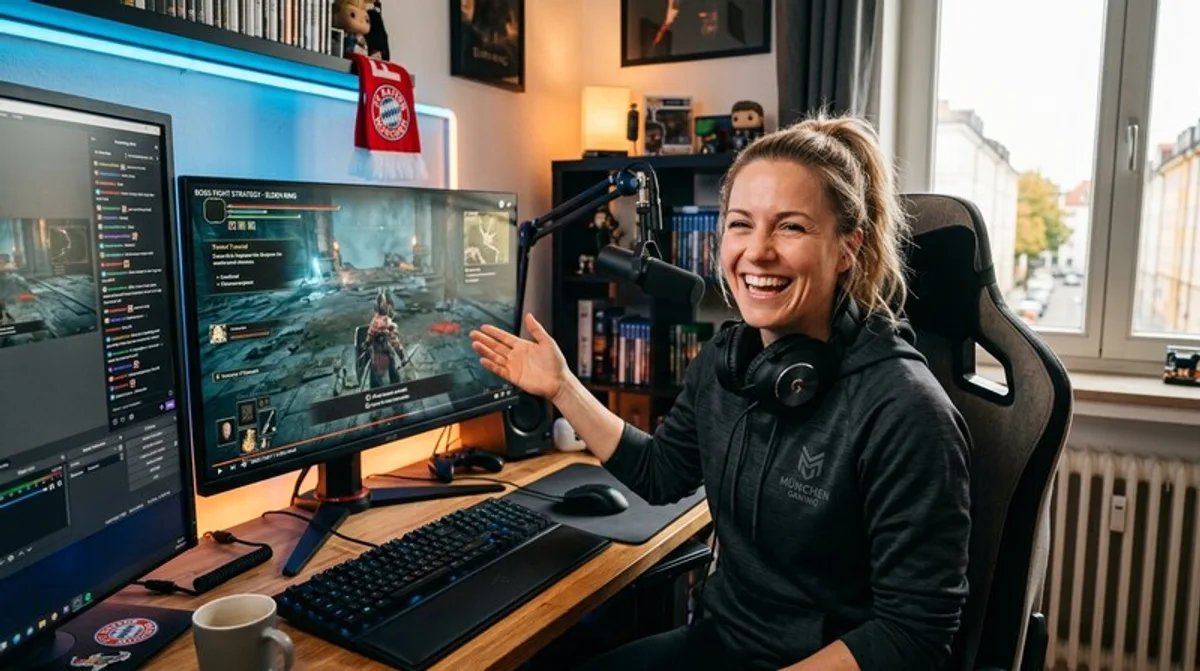
Micro influencers — creators with 10,000 to 100,000 followers — represent the most accessible and often the most effective segment of the influencer market for most brands. They offer a combination of genuine audience trust, niche specificity, and cost efficiency that neither nano creators nor macro stars can consistently match. This guide covers how to plan, run, and scale a micro influencer program from first campaign to ongoing ambassador network.
Before building out your brief or budget, use the Instagram Analyzer to estimate per-creator costs based on follower count and engagement rate so your budget planning reflects realistic market rates.
Related: Influencer Pricing by Follower Count: Complete Rate Table for Every Tier, Nano vs Micro vs Macro Influencers: Which Is Right for Your Budget?
Why Micro Influencers Are the Sweet Spot for Most Brands

The case for micro influencers rests on three intersecting advantages that are difficult to achieve simultaneously at other tiers.
Engagement Rate
Micro influencers consistently deliver higher engagement rates than macro and mega creators. Industry benchmarks place average Instagram engagement at 3% to 6% for micro accounts compared to 1% to 2% for macro and below 1% for mega. On TikTok, micro creators regularly achieve 6% to 10% engagement while mega accounts often fall below 3%. This matters because engagement — real likes, comments, saves, and shares — signals audience attention, which is the actual commodity brands are purchasing.
Niche Targeting
Micro influencers typically built their audience around a specific topic: a particular style of cooking, a fitness discipline, a software product category, a regional travel circuit. That specificity translates directly into audience quality for brands whose customers match that niche. A supplement brand partnering with micro fitness creators is reaching people actively invested in health optimization. A SaaS tool partnering with micro tech creators is reaching decision-makers and practitioners. Broad macro reach rarely achieves this kind of audience alignment.
Cost Efficiency
A single macro influencer post costs between $5,000 and $25,000. For the same budget, a brand could activate 10 to 50 micro influencers, each producing authentic content, reaching niche audiences, and generating multiple pieces of content for potential repurposing. The engagement volume, content output, and audience diversity delivered by 20 micro creators routinely outperforms a single macro post at equivalent spend.
Micro Influencer Campaign Formats
Not all micro influencer campaigns are structured the same way. The right format depends on your campaign goals, budget, and how much creative control the brand needs.
Single Post Campaign
The simplest structure: each creator publishes one sponsored piece of content. Best for product launches, limited-time offers, and brands testing a new creator segment. Low management overhead, easy to measure, straightforward brief. The main limitation is minimal momentum — one post per creator rarely builds lasting brand recall.
Content Series
Each creator publishes two to five posts over a defined period, often following a content arc (unboxing, first use, long-term review, or seasonal progression). Series formats build stronger brand association and give the creator room to show genuine product use rather than a single promotional moment. Brands typically pay 15% to 25% less per post when negotiating a series versus individual posts, and creators benefit from a predictable income commitment.
Account Takeover
The creator runs content on the brand's social channels for a defined period, bringing their audience to the brand's owned channels. This format works best when the brand has an established audience that benefits from fresh creative energy, or when the creator's format (e.g., live cooking demos, Q&A sessions) is more at home on the brand's channel than the creator's own feed. Takeovers command a 30% to 60% premium over standard post rates given the additional brand exposure.
Ambassador Program
An ongoing paid relationship where the creator represents the brand across multiple campaigns over months or a full year. Ambassadors typically receive a monthly retainer plus per-post fees, product supply, and often performance bonuses tied to affiliate sales or promo codes. The brand benefits from authentic long-term integration into the creator's content, and the creator benefits from income stability. Ambassador rates are typically negotiated at a 10% to 20% discount to individual post rates in exchange for the volume commitment.
How Many Micro Influencers to Activate at Different Budget Levels

| Campaign Budget | Recommended Micro Creator Count | Content Volume | Average Per-Creator Budget |
|---|---|---|---|
| $5,000 | 5–10 creators | 5–15 posts | $500–$1,000 |
| $10,000 | 10–20 creators | 10–30 posts | $500–$1,000 |
| $20,000 | 20–40 creators | 20–60 posts | $500–$1,000 |
| $50,000 | 50–100 creators | 50–200 posts | $500–$1,000 |
| $100,000 | 80–150 creators | 100–400 posts | $700–$1,250 |
These allocations assume standard micro rates ($400 to $1,500 per Instagram post) and one to two deliverables per creator. Adjust downward if you need TikTok video production, which takes more creator time, or upward if your niche commands premium rates (finance, legal, B2B tech).
Briefing Micro Influencers Effectively
The most common mistake brands make when briefing micro influencers is over-scripting. Micro creators built their audiences through a specific voice and perspective. When a brief turns that voice into a brand spokesperson reciting bullet points, the content underperforms and the audience notices the inauthenticity.
Effective micro briefs include:
- Campaign objective in one sentence: What you want the audience to feel, know, or do.
- Mandatory inclusions: Product name, key claim or USP, required disclosure language, any prohibited comparisons.
- Creative freedom zone: Explicitly state what the creator controls — format, storytelling approach, personal angle, setting.
- Technical requirements: Resolution, length (if video), tagging requirements, link in bio expectations, posting window.
- Examples of content you like: Two or three reference posts that show tone and style, not scripts to copy.
A brief that fills more than one page is typically a brief that will produce mediocre content. The creator's job is to translate your objective into their language. Your job is to give them the objective clearly and then step back.
Managing Micro Influencers at Scale
A campaign with five creators can be managed in a spreadsheet. A campaign with fifty requires dedicated systems.
Spreadsheet Management (up to ~15 creators)
For smaller campaigns, a shared Google Sheet or Airtable base handles outreach tracking, agreement status, brief delivery, content approval, posting confirmation, and payment status. Include columns for: creator handle, follower count, engagement rate, agreed rate, deliverables, due date, content approval status, live post URL, and payment date. This level of detail prevents the most common micro campaign failure — losing track of who has been paid, who has posted, and what was approved.
Platform Tools (15+ creators)
At scale, platforms like Aspire, Grin, Modash, or Upfluence manage the workflow in a single dashboard. They handle creator discovery, outreach sequences, contract generation, content submission and approval, link tracking, and performance reporting. The cost — typically $500 to $3,000 per month depending on tier — is justified once you are running campaigns with 20 or more creators simultaneously or managing ongoing ambassador relationships.
Content Approval Process for Micro Campaigns at Scale
Content approval is where micro campaigns most commonly stall. Without a clear process, brands get buried in back-and-forth, creators post late, and performance windows are missed.
A workable approval process:
- Creator submits draft content 72 hours before planned posting date.
- Brand reviews within 24 hours. One round of revisions only, focused on mandatory inclusions and factual accuracy — not creative rewriting.
- Creator posts within 24 hours of approval, confirms with a direct URL or screenshot.
- Brand team captures post URL and engagement metrics at 24 and 72 hours post-publication.
Specify in the contract that the approval window is 24 hours. If the brand does not respond in 24 hours, the creator may post. This protects creators from indefinitely delayed posting windows while maintaining brand oversight on required disclosures and claims.
Micro Influencer Performance Benchmarks
| Metric | Instagram Micro Benchmark | TikTok Micro Benchmark |
|---|---|---|
| Engagement Rate | 3%–6% | 6%–12% |
| Cost per Engagement (CPE) | $0.05–$0.40 | $0.03–$0.25 |
| Story View Rate | 8%–15% of followers | N/A |
| Reel / Video View Rate | 15%–40% of followers | 50%–300% of followers (FYP) |
| Average ROAS (DTC brands) | 2x–5x | 2x–6x |
| Affiliate Conversion Rate | 1%–4% | 2%–6% |
One Macro vs Ten Micro at the Same Budget
One of the most useful exercises in campaign planning is comparing what the same budget buys at different tier allocations.
Assume a $15,000 Instagram campaign budget:
- Option A: One macro influencer (800,000 followers) — single post, estimated 1% to 1.5% engagement rate, one content asset, single audience.
- Option B: Fifteen micro influencers (20,000 to 60,000 followers each) — fifteen posts, estimated 3% to 5% engagement rate each, fifteen content assets usable for paid amplification, diverse audiences across multiple niches.
Option A delivers reach, simplicity, and potentially strong brand association if the macro creator is genuinely respected in the niche. Option B delivers more total engagement volume, lower risk (no single creator failure kills the campaign), multiple pieces of content for repurposing, and the ability to reach fifteen distinct micro-communities rather than one broad audience.
For brand awareness campaigns with broad appeal, macro sometimes wins. For conversion campaigns, niche community building, and product launches requiring genuine product integration, ten to twenty micro influencers almost always outperform one macro at the same spend.
Scaling from Pilot to Full Program
Most successful micro influencer programs begin as a pilot of five to ten creators, with full-scale expansion only after learning what works.
Pilot phase (5–10 creators): Test three to five different niches or audience segments. Use at least two creators per segment to separate creator-specific performance from segment-level signal. Measure engagement rate, CPE, traffic, and conversion from UTM links. Identify which niches and content formats drove results.
Growth phase (15–30 creators): Scale the segments that worked in the pilot. Standardize the brief format, approval process, and payment workflow. Begin building ambassador relationships with top-performing pilot creators. Introduce a platform tool if spreadsheet management becomes unsustainable.
Full program (50+ creators): Systematize discovery with platform tools. Build a tiered creator roster — core ambassadors on retainer, regular campaign participants on per-activation fees, and a discovery pool for new voices and niches. Define quarterly activation calendars aligned with product launches, seasonal campaigns, and content tentpoles. Track lifetime creator performance to identify your highest-performing voices for increased investment.
For rate tables across all tiers, formats and platforms, see our influencer marketing pricing guides.
Sizing Micro Creator Budgets With Per-Creator Rate Data Before Campaign Launch
Budget tables built from tier averages are a starting point — but a $15,000 campaign distributed across 15 creators needs per-creator rate accuracy, not a category average. The Instagram Analyzer generates an engagement-adjusted rate for any public creator profile, letting you validate each creator's quoted fee against their actual engagement metrics before the campaign brief goes out. That validation is the difference between 15 accurate deals and 15 negotiations starting from inflated rate cards.
When building a shortlist of micro creator candidates for a campaign — comparing two fitness creators at the same follower count where one has 4.8% engagement and the other has 1.6% — the Profile Comparison Tool shows both profiles' engagement scores and implied rates side by side, making the performance difference concrete before any outreach starts.
Frequently Asked Questions
Get the market rate for any creator — free
Enter followers, niche, and content type. Get an instant benchmark with CPM equivalent and fair/high/low verdict.
Open Rate Calculator →