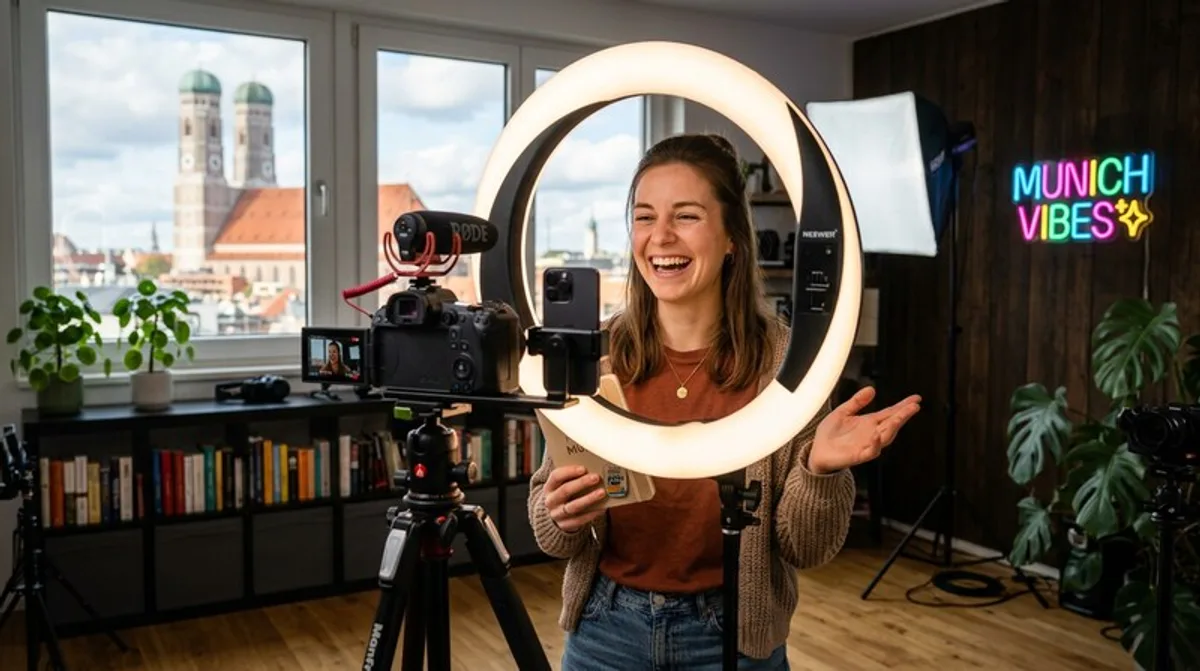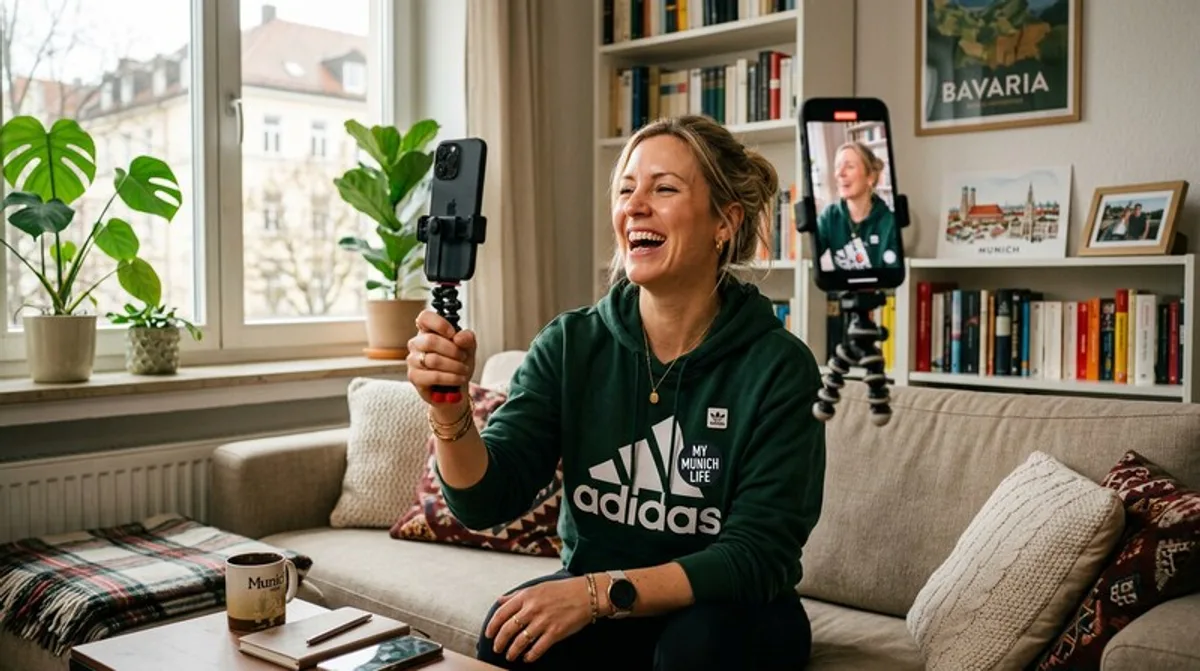
Instagram branded content ads — now officially called Instagram Partnership Ads — represent one of the most effective formats in social media advertising. They combine the trust and authenticity of creator content with the targeting precision of Meta's paid advertising infrastructure. For brands, they routinely outperform standard ad creative on CTR and conversion rate benchmarks. For creators, they represent a negotiable add-on to their standard rate that can meaningfully increase per-deal income. This guide covers how they work, what they cost, and when to use them.
What Are Instagram Branded Content Ads?

Instagram branded content ads (partnership ads) allow a brand to take a creator's organic post — whether a feed photo, Reel, or Story — and run it as a paid advertisement through Meta Ads Manager. The ad appears in users' feeds with the creator's handle visible, labeled as "Paid partnership with [Brand]." The viewer sees creator content, not a polished brand production, which is precisely why these ads outperform standard brand creative.
Related: Creator Whitelisting Guide 2026: Costs, How It Works, and ROI Benchmarks, Instagram Reel Pricing: How Much Does a Sponsored Reel Cost?
The key distinction from a standard ad: the content originates with the creator and lives on the creator's handle (or is served as a "dark post" — a boosted version not posted organically). The brand provides the targeting, budget, and optimization parameters via Ads Manager. The creator provides the trust equity and authentic presentation.
This format is different from a brand simply "boosting" a post from their own account. In a partnership ad, the creator's identity is central — the ad delivers from the creator's handle or as a dual-labeled post, not from the brand's account alone.
How Partnership Ads Work Technically
The setup process involves both the creator and the brand:
- Creator enables branded content permissions: In Instagram's settings, the creator enables the "Allow business partner to boost this content" option for the specific post or at the account level.
- Brand accesses the content in Ads Manager: Once the creator enables permissions, the brand can select the creator's post as the ad creative in Meta Ads Manager.
- Brand configures campaign settings: The brand sets audience targeting, campaign objective, budget, bid strategy, placement settings, and ad scheduling — all standard Meta campaign controls.
- Ad serves to the brand's target audience: The post now reaches not just the creator's existing followers but the brand's precisely targeted audience at scale.
The creator does not need to manage any aspect of the paid distribution — once they grant permissions, the brand handles the advertising infrastructure entirely. This low-friction handoff is one reason partnership ads have become standard in brand-creator contracts.
Why Branded Content Ads Outperform Regular Ads

The performance advantage of partnership ads over standard brand creative is well-documented across thousands of campaigns:
Trust signal: Content that comes from a real person — with a name, a face, and a history of authentic posting — bypasses the skepticism audiences apply to overtly promotional brand content. Users who follow the creator, or who see the creator's post through a mutual-connection signal, process the content differently than they process a brand ad.
Native format: Partnership ads look like organic content, not advertising. In a feed full of polished brand ads, a creator's natural video or photo stands out by blending in. The paradox of "standing out by looking organic" is a real performance driver.
Creative quality: Creator content is often better adapted to how platform audiences actually consume content than brand-produced creative optimized for broadcast media conventions. Short vertical video shot with a phone, with natural sound and unscripted commentary, frequently outperforms expensive studio-produced content on TikTok and Instagram.
Performance benchmarks versus standard brand creative:
- Click-through rate (CTR): 2-3x higher for partnership ads vs. standard brand creative in most categories
- Cost per acquisition (CPA): 20-40% lower in conversion campaigns
- Brand lift: Measurably higher recall and favorability in brand lift surveys
- Engagement rate: 2-4x higher (relevant when measuring social proof for the organic post)
Pricing: Creator Fee Plus Ad Spend
The total cost of an Instagram partnership ad campaign has two components: the creator's fee and the brand's ad spend.
Creator Fee
The base creator fee is the standard organic post rate for the deliverable type. An Instagram Reel from a mid-tier creator (100K-500K followers) might have a base rate of $2,000-$6,000 for an organic post. When the brand also wants partnership ad rights, the fee increases by 15-25% for basic digital usage, or 50-100% for extended paid media usage (running the content as an ad for 30+ days).
Typical partnership ad rate structures:
- Single post + 30-day partnership ad rights: base rate + 25-40%
- Single post + 60-day partnership ad rights: base rate + 40-75%
- Single post + 90-day partnership ad rights: base rate + 75-100%
Ad Spend Budget
The brand's media spend is separate from creator fees and is determined by campaign scale objectives. Typical partnership ad media budgets:
- Testing phase (proving the creative): $500-$2,000
- Standard campaign: $3,000-$15,000
- Scaled campaign (multiple creators, multiple posts): $20,000-$100,000+
Total Budget Breakdown Example
A mid-tier campaign using three micro creators:
- 3 x Instagram Reel (base rate $800 each): $2,400
- Partnership ad rights (45-day, +50%): $1,200
- Creator sub-total: $3,600
- Ad media spend (30 days): $8,000
- Agency management (if applicable, 15%): $540
- Total campaign budget: ~$12,140
Rate Impact of Granting Branded Content Permissions
Creators who do not account for partnership ad rights in their pricing routinely leave money on the table. When a creator posts content for a flat fee and the brand then asks for permission to boost it as a paid ad, the creator is effectively selling an additional media asset — the right to serve that content to thousands or millions of additional users who are not their followers.
Standard industry practice is to charge 15-25% above base rate for granting 30-day partnership ad permissions. For longer periods (60-90 days) or higher-spend campaigns (where the brand has explicitly said they plan to run significant media budget), the premium should be higher: 50-100% above base rate.
Creators should address this explicitly in their rate card and contracts, not as an afterthought. A contract that does not specify usage rights defaults to the creator retaining all rights — which means any brand request for partnership ad access after signing requires a new negotiation and additional payment.
Use the Instagram Analyzer to establish your base rate before calculating the appropriate partnership ad premium.
Performance Benchmarks: Branded Content Ads vs. Standard Creative
| Metric | Standard Brand Creative | Partnership Ads | Typical Uplift |
|---|---|---|---|
| Click-Through Rate (CTR) | 0.5–1.2% | 1.2–3.5% | 2–3x higher |
| Cost Per Click (CPC) | $1.50–$4.00 | $0.60–$2.00 | 30–50% lower |
| Conversion Rate (Landing Page) | 1.5–3.5% | 2.5–5.5% | 20–60% higher |
| Cost Per Acquisition (CPA) | $30–$80 (varies widely) | $18–$55 | 20–40% lower |
| Ad Recall Lift | Baseline | 1.5–2.5x baseline | +50–150% |
These benchmarks are averages across categories. Performance varies significantly by product category, creator fit, audience targeting quality, and creative execution. DTC brands in beauty, fashion, and supplements consistently see partnership ad performance at or above these benchmarks.
When to Use Partnership Ads vs. Other Formats
Use Partnership Ads When:
- You have creator content that has already demonstrated strong organic engagement (organic signal validates paid amplification)
- Your target audience overlaps with the creator's audience demographics and you want to scale that reach beyond the creator's followers
- You are running a direct response campaign (conversion, app install, website traffic) where authentic creative typically outperforms polished brand ads
- You want to A/B test multiple creator pieces to identify top-performing creative before scaling ad spend
Use Standard Brand Ads When:
- The campaign requires precise messaging control that a creator's authentic style cannot accommodate
- You are running branding campaigns where polished production values are part of the brand positioning
- The campaign involves claims or disclosures that require legal review at a level the creator cannot manage
Use Dark Posts (Creator Content Without Organic Posting) When:
- You want to test multiple creative variations without cluttering the creator's feed
- The campaign timing does not align with the creator's organic posting schedule
- The content is promotional in a way the creator does not want permanently on their profile
Instagram Collab Posts vs. Branded Content Ads
Instagram's Collab feature allows two accounts (e.g., brand and creator) to co-author a single post that appears on both profiles simultaneously. This is different from branded content ads and serves different purposes:
- Collab posts: One piece of content appears on both the creator's and brand's feeds, sharing all engagement metrics. The post reaches both accounts' organic follower bases simultaneously. This is a free feature that does not require ad spend and is not running through Ads Manager.
- Partnership ads: The creator's content is boosted via paid advertising to a defined target audience beyond organic followers. Requires ad budget and campaign setup in Ads Manager.
Many brands use both simultaneously — a Collab post for organic distribution to both follower bases, plus partnership ad rights to boost the same content to a paid target audience for the duration of the campaign.
TikTok Spark Ads: The Equivalent on TikTok
TikTok's equivalent of Instagram partnership ads is called Spark Ads. The mechanics are similar: a creator posts organic content, grants the brand advertising authorization through TikTok's Spark Ads workflow, and the brand runs the video as a paid ad from within TikTok Ads Manager.
Spark Ads maintain the creator's handle, engagement metrics (views, likes, comments) from both organic and paid distribution are combined into a single visible count, and the content benefits from TikTok's native format advantage. Performance benchmarks for TikTok Spark Ads versus standard in-feed ads show similar advantages to Instagram partnership ads — 30-60% lower CPA and 2-3x higher CTR in many categories.
The rate premium for TikTok Spark Ad permissions follows the same logic as Instagram: 15-50% above base rate depending on duration and expected media spend.
For rate tables across all tiers, formats and platforms, see our complete Instagram influencer rate guide.
Benchmarking Your Base Rate Before Calculating Partnership Ad Premiums
Partnership ad pricing is a multiplier applied to your organic content rate — which means getting that base rate right is the foundation of every whitelisting and branded content negotiation. Run your profile through the Instagram Analyzer before any branded content conversation: the engagement-adjusted rate estimate tells you where your organic Reel or feed post rate sits in the current market, which then determines how much the 25–100% partnership ad premium should add. Quoting a partnership ad rate off an inaccurate base means either undercharging for the combined package or pricing yourself out of deals unnecessarily.
When brands are comparing multiple creator candidates for a partnership ad campaign and need to see which profile delivers the best engagement value before amplifying with paid media, the Profile Comparison Tool shows engagement scores and implied rates side by side. That comparison informs which creative investment is worth scaling with ad spend.
Frequently Asked Questions
Get the market rate for any creator — free
Enter followers, niche, and content type. Get an instant benchmark with CPM equivalent and fair/high/low verdict.
Open Rate Calculator →