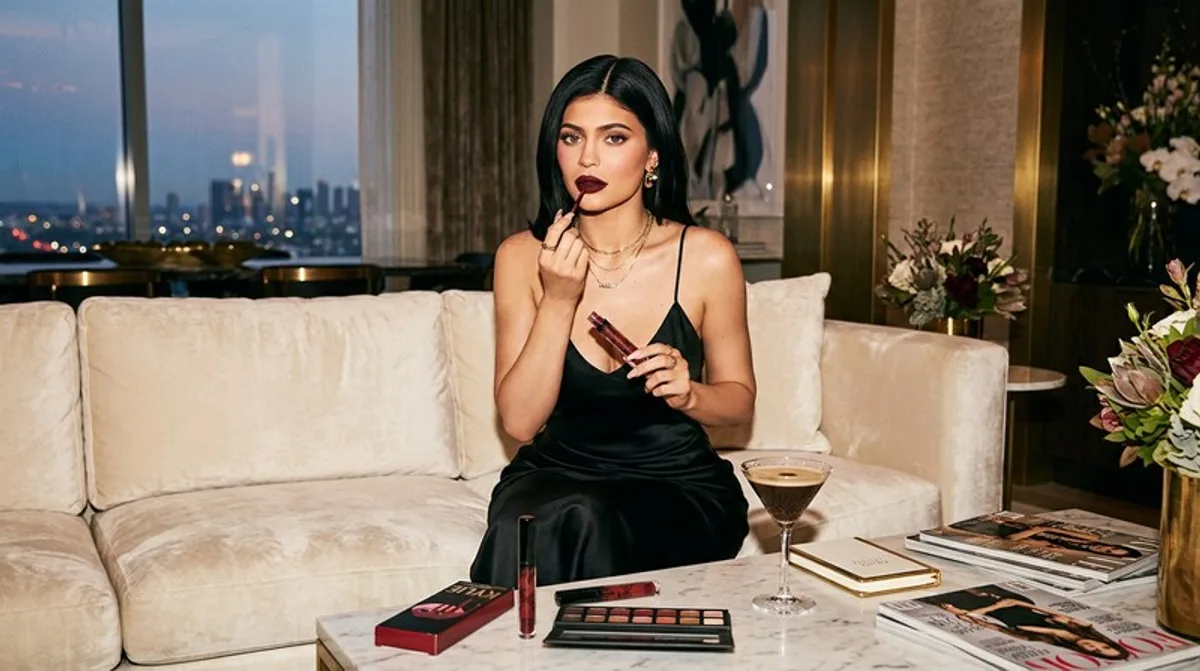
Who Is Kylie Jenner?
Kylie Kristen Jenner turned a lip kit waitlist into a billion-dollar beauty company before she was 22, using Instagram as both the distribution channel and the proof of demand. Kylie Cosmetics launched in November 2015 with three liquid lipstick shades sold exclusively through her website — the first drop sold out in under a minute, crashed the site, and generated $1 million in sales in the first minute of availability. That product launch model, which has since become standard practice in creator-to-brand commerce, was genuinely novel at the time: no retail partnership, no traditional advertising, no wholesale infrastructure — just Instagram posts driving direct-to-consumer transactions from an audience that had been primed for years.[1]
Latest videos · Open channel ↗
The Forbes "youngest self-made billionaire" designation in 2019 — which generated its own controversy about the definition of "self-made" — established the commercial ceiling that Instagram celebrity could theoretically reach. Whether the qualifier applied accurately or not, the underlying business fact was real: a social media following, built from a reality television platform, had converted to a consumer goods company generating hundreds of millions in revenue annually.
Background & KUWTK Origins
Kylie Kristen Jenner was born on August 10, 1997, in Los Angeles, California, to Kris and Caitlyn Jenner. She grew up on camera: Keeping Up with the Kardashians premiered in 2007 when Kylie was 10 years old, making her one of very few celebrities whose childhood was documented for a mass audience in real time. That decade of parasocial relationship-building with KUWTK's audience — viewers who watched her grow from a child to a teenager on screen — created the trust infrastructure that made her Instagram following commercially exploitable in a way that cold-audience celebrity accounts were not.[2]
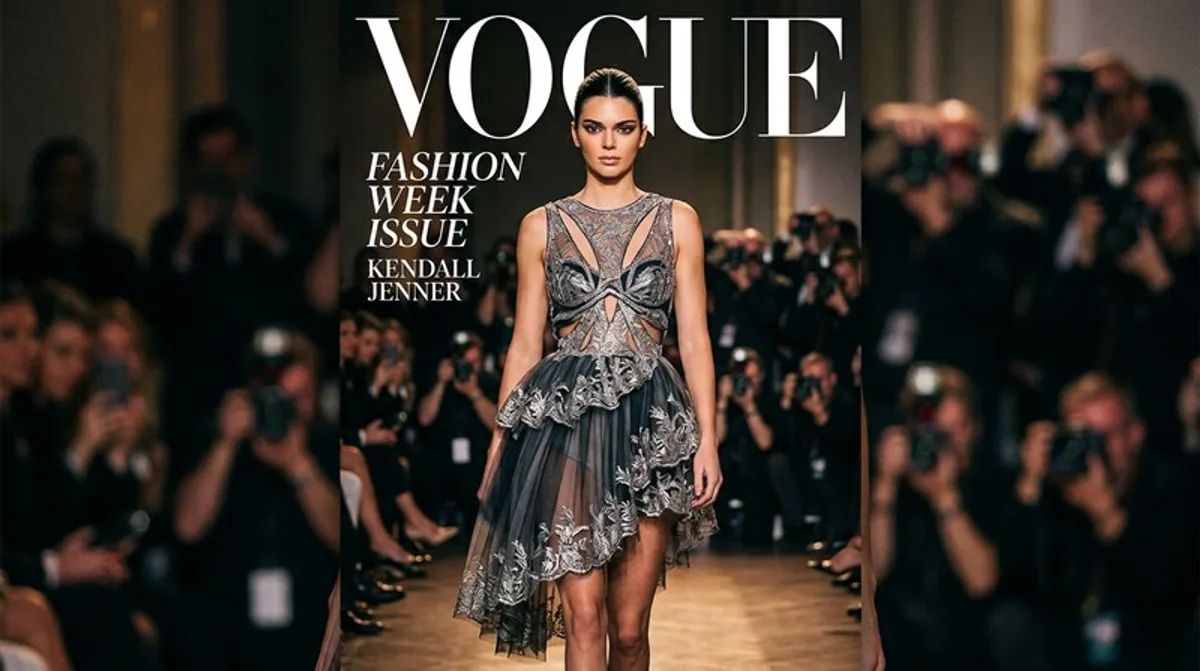
She and her sister Kendall Jenner joined the show as children and developed distinct public identities: Kendall toward high fashion and modeling, Kylie toward beauty and entrepreneurship. The divergence in their career trajectories, despite identical origin points, illustrates how the same platform reach can be converted into fundamentally different commercial operations.
Kylie Cosmetics & the Drop Model
The Kylie Cosmetics origin story is now a business school case study. In 2015, Kylie's visible lip augmentation generated enormous public speculation — she neither confirmed nor denied the procedure for months, a strategic ambiguity that kept her lips in media conversation continuously. When she launched the Kylie Lip Kit — a liquid lipstick and liner set designed to create the look — the demand was pre-built. The company launched without external investment, without retail distribution, and without a marketing budget beyond her Instagram. The first drop's sell-out in under a minute was the proof of concept.[3]
Coty Inc. acquired a 51% stake in Kylie Cosmetics in 2019 for $600 million — a valuation that implied a $1.2 billion company. Subsequent reporting raised questions about whether the revenue figures used in that valuation were accurate at the time of sale, but the Coty deal itself remained a landmark in creator-to-consumer-goods valuation history regardless of the subsequent scrutiny.
Career Timeline
Khy & Post-Cosmetics Business Expansion
In 2023, Kylie Jenner launched Khy — a fashion brand targeting Gen Z consumers with trend-adjacent apparel at accessible price points. The brand's launch strategy replicated the Kylie Cosmetics drop model: limited-window product releases, Instagram-driven demand building, direct-to-consumer sales. Khy positions her for the next phase of the creator-to-brand evolution: from single-category beauty founder to multi-category consumer lifestyle brand.
Brand Deals & Instagram Economics
Kylie Jenner's Instagram post rate is among the highest individually documented in creator economy research — estimated at $1.5 million–$3.5 million per post for brand partnerships. That figure preceded Kylie Cosmetics generating the same revenue through owned product sales, which has reduced her dependence on third-party brand deals. Her current partnership activity focuses on categories that don't compete with her owned brands (fashion, luxury goods, select lifestyle brands) rather than beauty, where she is now the brand rather than the ambassador. For current benchmarks across celebrity influencer tiers, see our YouTube influencer pricing guide.
The commercial lesson from her career: brand deal economics at the very top tier eventually become less important than owned brand economics — the per-post fee is replaced by the product margin. Compare how creators at different stages balance sponsorships versus owned revenue in our celebrity pricing breakdown.
Related Creators
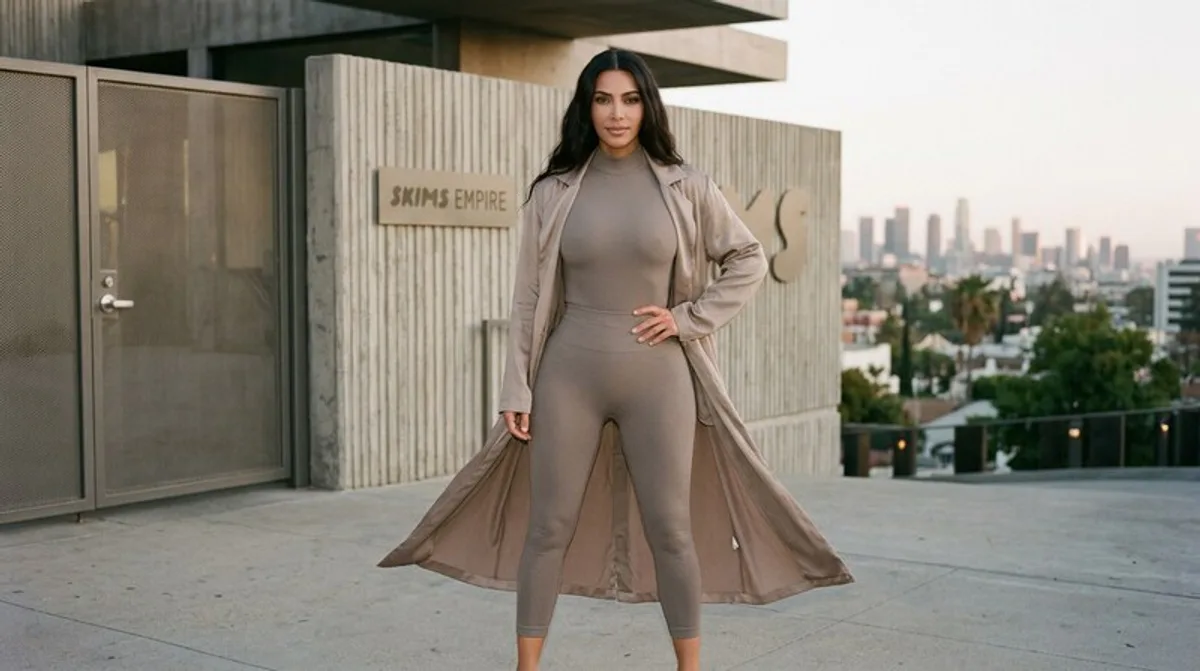
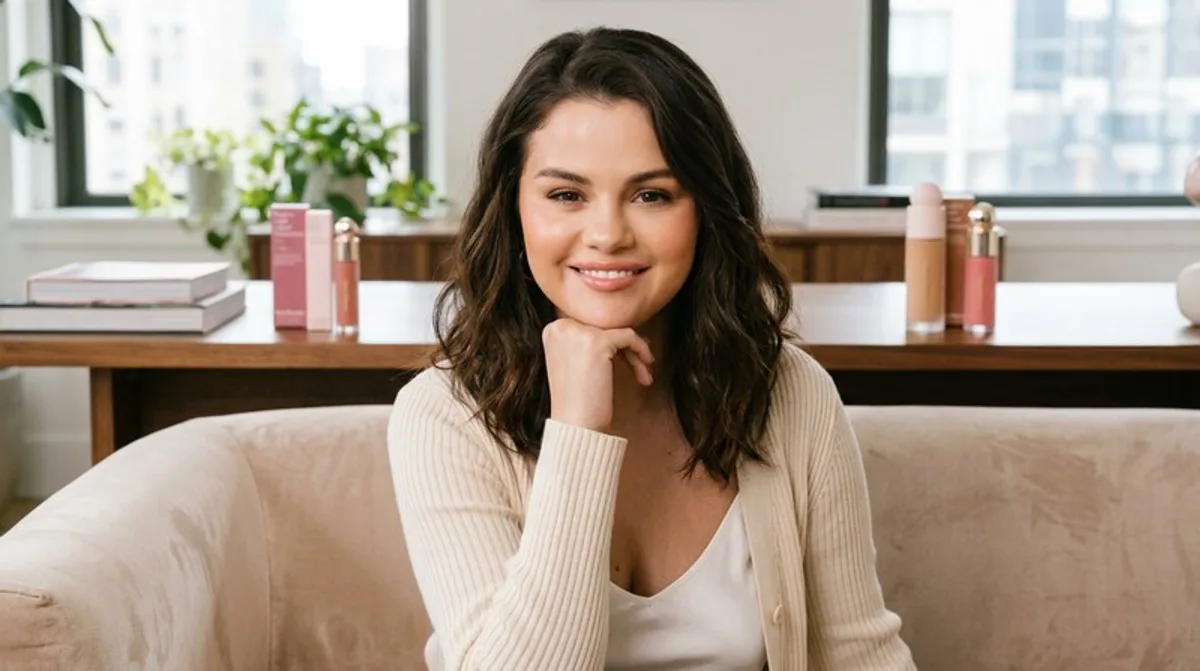
Kim Kardashian is the family member whose entrepreneurial trajectory Kylie followed most closely — SKIMS launched in 2019 using the same Instagram-to-DTC playbook as Kylie Cosmetics, in a different product category (shapewear vs. beauty). The parallel tracks demonstrate that the same audience-to-commerce model works across categories when the creator's identity is genuinely associated with the product. Kendall Jenner represents the contrasting path from the same KUWTK origin: high fashion modeling rather than entrepreneurship, with 818 Tequila as her owned brand — a reminder that identical platforms can be converted into different commercial identities. Selena Gomez's Rare Beauty launched five years after Kylie Cosmetics and outperformed it in critical and commercial terms, illustrating how the second mover can learn from the first-mover's product development and brand positioning choices.
Sources
- 1 Forbes — Kylie Jenner, the Youngest Self-Made Billionaire (2019)
- 2 The New York Times — How Kylie Jenner Built a Billion-Dollar Brand on Instagram (2018)
- 3 Business of Fashion — Kylie Cosmetics: The Drop Model That Changed Beauty Retail (2016)
- 4 WSJ — Coty Buys Majority Stake in Kylie Cosmetics for $600 Million (2019)
Platform Statistics
Channel Growth History
| Year | YouTube Subscribers | Monthly Views | Est. Annual Earnings |
|---|---|---|---|
| 2026 | 0 | 0 | $24.0M – $96.0M |
| 2022 | 0 | 0 | $24.0M – $84.0M |
| 2018 | 0 | 0 | $9.6M – $30.0M |
| 2015 | 0 | 0 | $2.4M – $8.4M |
Data sourced from Social Blade & public estimates. Updated annually.
Estimated Sponsorship Rates
Market estimates — actual rates vary by deal structure & exclusivity
Brand Deals & Sponsorships
| Brand | Year | Deal Type | Source |
|---|---|---|---|
| Kylie Cosmetics | 2015 | Founder | Press Release |
| Adidas | 2018 | Brand Campaign | Press Release |
| Pepsi | 2017 | Commercial | Press Release |
Frequently Asked Questions
Kylie Jenner's real name is Kylie Kristen Jenner.
Kylie Jenner was born on August 10, 1997, and is 29 years old as of 2026.
Kylie Jenner's net worth is estimated at $900 million, based on platform ad revenue, brand partnerships, merchandise, and business ventures. This is an estimate — exact figures are not publicly disclosed.
Kylie Jenner is American, born in Los Angeles, California, USA.
Kylie Jenner — Official Social Media & Links
All accounts below are the verified official profiles for Kylie Jenner. Follower counts are approximate and updated periodically.
Sponsorship Rates & Booking
- Youtube: 11M followers
- Instagram: 400M followers
- Tiktok: 57M followers
- Twitter: 40M followers