Who Is aespa?
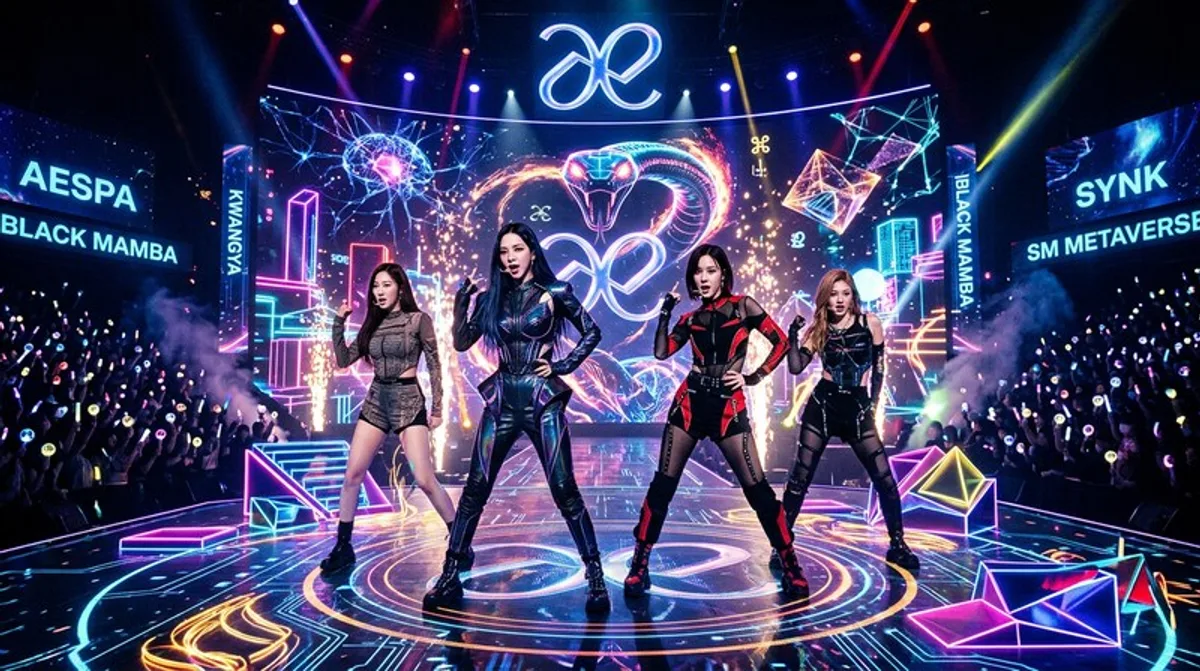
aespa (에스파) is the four-member K-Pop girl group formed by SM Entertainment and debuted on November 17, 2020 — the group that introduced the metaverse concept framework to mainstream K-Pop idol structure by assigning each member a digital AI avatar counterpart ("æ" versions: æ-Karina, æ-Winter, æ-Giselle, æ-Ningning) whose existence and backstory are integrated into the group's lore, music video narratives, and fictional universe "KWANGYA." With 7 million YouTube subscribers and an SM Entertainment infrastructure that has produced SHINee, EXO, Red Velvet, and NCT, aespa represents the most conceptually ambitious iteration of the SM artist development model: a group whose commercial identity requires audience investment not just in music and performance but in an interactive narrative universe whose mythology is continuously developed across music releases, webtoons, and digital content. Their debut single "Black Mamba" broke the record for fastest K-Pop debut music video to reach 100 million views at the time, establishing commercial velocity that positioned them as the immediate heir to BLACKPINK's global K-Pop dominance. The members — Karina (Yu Ji-min), Giselle (Uchinaga Aeri), Winter (Kim Min-jeong), and Ningning (Ning Yi-zhuo) — span South Korean and Chinese nationality, with Giselle as the group's Japanese-Korean member, reflecting SM Entertainment's deliberate multi-national composition strategy designed for simultaneous Korean, Japanese, Chinese, and Western market penetration. Their Grammy Museum exhibition in 2023 and Coachella performance in 2023 marked aespa's transition from K-Pop phenomenon to genuine Western festival circuit presence.
Latest videos · Open channel ↗
Their audience's specific characteristic is the K-Pop fandom demographic (predominantly female, 15–28) whose merchandise purchasing behavior, streaming coordination, and brand awareness conversion rates represent some of digital advertising's highest per-viewer commercial performance metrics — the specific audience profile that luxury fashion brands, Korean beauty companies, and technology brands actively seek for aspirational product positioning.
Origins: Seoul 2020, SM Entertainment & the Metaverse K-Pop Framework
SM Entertainment's development of aespa began with a concept that no prior K-Pop group had attempted at commercial scale: the integration of artificial intelligence avatar counterparts for each member as a narrative and identity framework rather than as a marketing gimmick. Where other K-Pop groups have experimented with digital components — virtual concerts, avatar versions for gaming crossovers — aespa's metaverse concept is structural: the "æ" avatars have defined personalities, a mythology about their origin in the KWANGYA universe, and an ongoing narrative relationship with their human member counterparts that forms the conceptual backbone of the group's music video storytelling. Their debut "Black Mamba" (November 2020) embedded this mythology from the first release: the titular antagonist is KWANGYA's villain figure, the avatars are characters within its conflict, and the human members navigate between their physical world and the digital universe. This level of conceptual investment at debut required SM's full A&R and production infrastructure — the system that had developed the SM Universe lore across SHINee, EXO, and NCT releases — and represented a deliberate escalation of K-Pop's storytelling ambition at a moment when BTS's HYBE Universe had demonstrated that K-Pop narrative mythology could generate revenue independent of music streaming alone.[1]
Coachella, Global Expansion & 7M Subscribers
aespa's 2023 Coachella performance was the live event milestone that confirmed their status as a group whose cultural footprint had extended beyond K-Pop's dedicated fandom ecosystem into mainstream Western music consumption — a threshold that fewer than five K-Pop groups had crossed before them. Their brand partnerships with Givenchy (Karina as global ambassador), Burberry, and Samsung reflect the luxury and technology categories that K-Pop's premium audience demographics make available: consumers whose identity investment in K-Pop idol fashion translates directly into above-average purchase behavior for luxury fashion brands that their idols represent. The group's multi-national composition — Giselle as Japanese-Korean, Ningning as Chinese — provides SM Entertainment with the market access infrastructure for simultaneous Japan and China commercial activity that domestically composed Korean groups cannot replicate. Their 7 million YouTube subscribers represent the music video and performance content audience across markets, supplemented by the far larger streaming platform audience on Spotify and Apple Music whose consumption data the YouTube subscription count does not reflect.[2]
Career Timeline
Brand Deals & K-Pop Group Creator Economics
aespa's estimated brand deal rate is $200,000–$600,000 per campaign, with individual member ambassador deals at Givenchy and Burberry level operating at luxury fashion endorsement rates rather than standard influencer pricing. K-Pop idol brand partnerships command premium rates because the audience's identity investment in their idols translates into above-average purchase behavior for endorsed products — particularly in luxury fashion, skincare, and technology categories. SM Entertainment manages all commercial activity, making aespa brand partnerships subject to agency negotiation rather than direct creator outreach. For K-Pop creator and music group rate benchmarks, see our influencer pricing guide and celebrity Instagram pricing guide.
Related Creators
BLACKPINK's YG Entertainment global K-Pop dominance and aespa's SM Entertainment metaverse K-Pop framework both represent the full Korean entertainment industry infrastructure deployed behind four-member girl groups — demonstrating that the commercial gap between K-Pop's top-tier groups and independent YouTube creators is not just audience scale but organizational depth: record label resources, systematic debut infrastructure, and multi-market commercial networks that no individual creator operation can replicate, producing brand deal economics that operate by luxury fashion pricing logic rather than by influencer marketing CPM calculation.
For rates and benchmarks in this creator category, see our music influencer rates.
Sources
- 1 Billboard -- aespa and the Metaverse K-Pop Model: How SM Entertainment Built a Group Whose Identity Requires Mythology (2021)
- 2 Rolling Stone -- From "Black Mamba" to Coachella: aespa's Three-Year Path from K-Pop Debut to Western Festival Stage (2023)
Platform Statistics
Channel Growth History
| Year | YouTube Subscribers | Monthly Views | Est. Annual Earnings |
|---|---|---|---|
| 2024 | 0 | 0 | — |
| 2022 | 0 | 0 | — |
| 2021 | 0 | 0 | — |
Data sourced from Social Blade & public estimates. Updated annually.
Estimated Sponsorship Rates
Market estimates — actual rates vary by deal structure & exclusivity
Brand Deals & Sponsorships
| Brand | Year | Deal Type | Source |
|---|
Frequently Asked Questions
aespa's real name is aespa (에스파).
aespa was born on November 17, 2020, and is 5 years old as of 2026.
aespa's net worth is estimated at $15 million, based on platform ad revenue, brand partnerships, merchandise, and business ventures. This is an estimate — exact figures are not publicly disclosed.
aespa is South Korean, born in Seoul, South Korea.
aespa — Official Social Media & Links
All accounts below are the verified official profiles for aespa. Follower counts are approximate and updated periodically.
Sponsorship Rates & Booking
- Youtube: 7M followers
- Instagram: 10M followers
- Tiktok: 4M followers