
Startups have a structural advantage in influencer marketing that established brands routinely waste: authenticity of origin story, speed of decision-making, and the ability to offer equity and early-partner positioning that no Fortune 500 brand can replicate. When executed correctly, a startup influencer program outperforms brand advertising dollar-for-dollar — particularly in the $2,000–$20,000 monthly range where TV, OOH, and even most digital display advertising fail to deliver measurable ROI. This guide covers how to build a creator program from scratch with limited budget, which deal structures work best for each funding stage, and how to scale from $500/month to $20,000/month systematically.
Why Startups Should Use Influencer Marketing

Brand advertising — television, radio, display, out-of-home — builds awareness through repetition. It works at scale, but the minimum effective spend to generate measurable brand awareness in a national TV campaign starts at $500,000+. Startups operating pre-revenue or at early revenue stages cannot sustain that spend level. Influencer marketing works differently: it builds trust through social proof, operating at any budget level from $100 gifted products to $100,000 campaign spends.
Related: Micro Influencer Pricing on Instagram: The Smart Brand Strategy, Affiliate vs. Sponsored Content: Which Pricing Model Wins?
The trust-transfer mechanism is the key advantage. When a creator with a genuine audience relationship recommends a product, the audience transfers a portion of their trust in the creator to the brand. This is categorically different from a display ad, which makes no trust claim — it simply asserts the brand exists. For a startup with no brand recognition, trust transfer is the fastest path to first purchase. Conversion rates from creator-referred traffic consistently outperform cold display traffic by 3–8x.
The second advantage is speed. A startup can brief a nano creator on Monday and have content live by Friday. A traditional advertising campaign takes 3–6 months from brief to media placement. For a startup testing product-market fit, this speed is invaluable — influencer content provides real audience feedback in real time.
Before calculating rates, use the free influencer rate calculator to benchmark appropriate fees for your creator tier and platform combination.
Startup Influencer Budget Reality
| Funding Stage | Typical Monthly Influencer Budget | Creator Tier Focus | Primary Goal |
|---|---|---|---|
| Pre-seed / Bootstrapped | $0–$2,000 | Nano (1K–10K followers) | Product validation, UGC generation |
| Seed Stage | $2,000–$10,000 | Nano + Micro (10K–100K) | Audience acquisition, attribution testing |
| Series A | $10,000–$50,000 | Micro + Mid-tier (100K–500K) | Scaling proven channels, building ambassador network |
| Series B+ | $50,000–$200,000+ | Full creator stack | Brand awareness + performance at scale |
| Enterprise (non-startup) | $100,000–$2M+ | Macro + Celebrity | Mass awareness, market leadership signaling |
The most common startup mistake is over-allocating to mid-tier and macro creators before micro and nano channels are saturated. A $10,000 monthly budget achieves significantly higher CPE (cost per engagement) and CPC (cost per click) when spread across 10–20 micro creators ($500–$1,000 each) compared to a single mid-tier creator at $10,000. Nano and micro creators consistently deliver lower CPE and higher engagement rates — the primary metric for early-stage startups measuring awareness efficiency.
Startup Creator Stack: Nano and Micro First
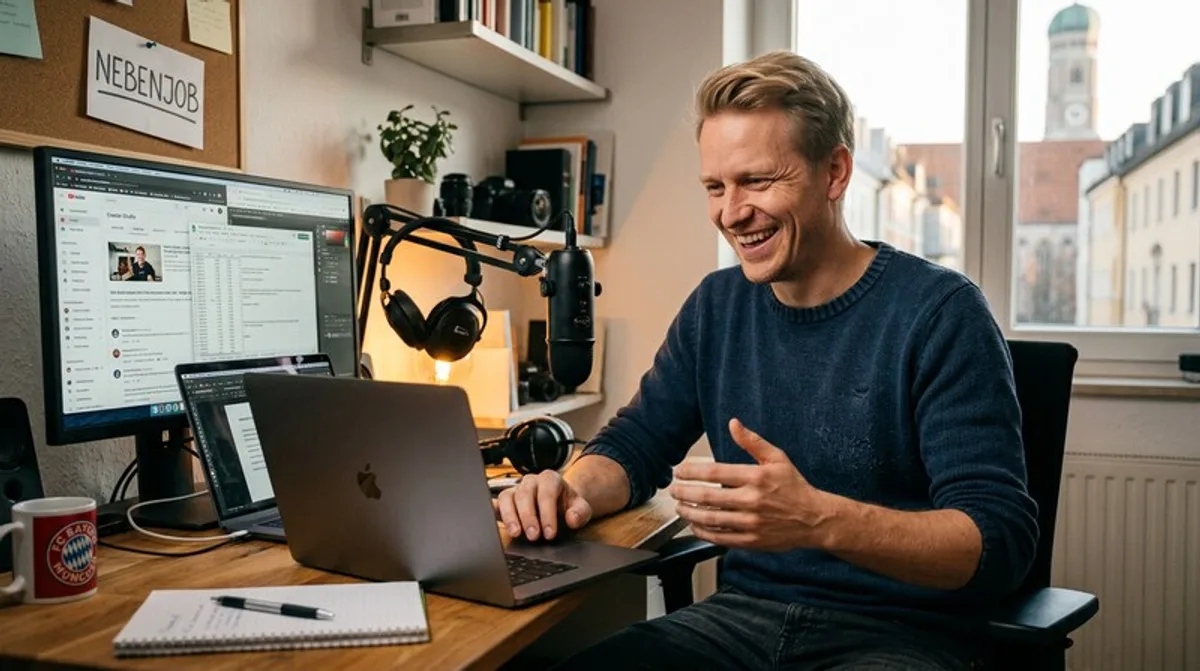
The startup creator stack should be built bottom-up, not top-down. Most brands do the reverse — they pursue mid-tier and macro creators because the audience numbers feel impressive — and overpay for reach that does not convert at early product-market fit stages.
Nano creators (1,000–10,000 followers): Highest engagement rates (typically 5–15% vs. 1–3% for macro). Will often post in exchange for product, reducing cash spend significantly. Audience relationships are personal and high-trust. Ideal for product seeding, early UGC generation, and testing messaging angles. Weakness: individual reach is small; requires volume (20+ creators) to generate meaningful aggregate reach.
Micro creators (10,000–100,000 followers): Best cost-per-engagement efficiency in the entire creator spectrum. Large enough to provide meaningful reach per creator; small enough that rates remain manageable ($200–$2,000 per post depending on niche and engagement). Highly niche-specific — a micro creator in your exact product category has an audience that is far more relevant than a macro lifestyle creator's broad audience. For most startups, micro creators should represent 50–70% of the influencer budget.
Mid-tier and macro creators become relevant after product-market fit is confirmed and the goal shifts from validation to scale. At that stage, the CPE efficiency trade-off is acceptable because the primary objective changes from conversion to awareness.
Product-Market Fit Testing via Influencer Seeding
Before committing to paid influencer deals, use product seeding to validate messaging and audience response. Product seeding means sending free product to creators with no payment and no guaranteed posting obligation — an honest exchange where you offer value (free product) and hope for organic content in return.
Seeding-to-post conversion rates average 15–40% across categories: beauty and food convert highest (30–40%), tech and B2B convert lower (10–20%). The content that does get posted from seeding is the most authentic available — the creator chose to post because they genuinely liked the product, which produces content with measurably higher engagement than paid posts.
What to measure during seeding: which product angles creators emphasize organically (this reveals your most compelling value proposition), which creator categories produce the highest engagement on seeded content, which demographic segments respond most positively in comments. These insights should directly inform your paid influencer strategy — you now have real data on what messaging works and which creator niches convert.
FTC disclosure note: even gifted product without payment requires disclosure under FTC guidelines. Content from seeded product must include #gifted or equivalent disclosure regardless of the no-payment arrangement.
Startup Influencer Deal Structures
Equity Compensation for Early Brand Ambassadors
Equity compensation for creator partnerships is an early-stage strategy that only works when the timing is right. It makes sense when: the creator is a genuine early user of the product (not just an influencer-for-hire), the startup has enough traction to make equity credible but not yet enough revenue to pay market rates, and the creator has a long-term audience relationship worth preserving.
Typical equity ambassador structures: 0.1–0.5% equity stake in exchange for 12–24 months of brand ambassador commitment, with performance milestones (minimum posting frequency, minimum reach targets) defined contractually. This structure works best for companies that have raised a seed round and have a credible equity story to tell. Offering equity to a creator purely to avoid paying cash is transparent and damages relationships — only offer equity when it genuinely represents a valuable long-term proposition for the creator.
Affiliate-First Model
The affiliate-first model starts creators on performance-based compensation before transitioning to flat-fee deals. Structure: creator posts with a unique discount code or tracking link (10–20% commission on attributed sales). This model works because it aligns startup and creator interests — both parties benefit only when content converts.
Typical affiliate commission rates by category: fashion/beauty (10–15%), tech products (5–10%), food/CPG (8–12%), software/SaaS (20–30% of first month's subscription). The affiliate model also serves as a creator quality filter — creators who convert for affiliate deals are demonstrably effective, making them candidates for flat-fee campaigns with confidence in performance.
Product-for-Content
Product-for-content deals are standard at the nano tier and acceptable at the low end of micro. Rules for successful product-for-content: the product must be genuinely valuable to the creator (not random gifting), the product cost should represent meaningful value (minimum $50–$100 retail; gifting a $15 product to a creator with 50,000 followers is an insult), and there must be no explicit demand for a post — only a genuine invitation to share if they enjoy the product. Demanding posts in exchange for product while refusing cash payment is both ineffective and damages creator relationships at scale.
How to Identify Micro Creators in Your Exact Niche
The most effective discovery method for startup-budget programs is hashtag and keyword search on each platform combined with customer social listening. Start with your top 3 product-relevant hashtags and manually review creators who post consistently in that content area. The signal to optimize for: content consistency (posting in the niche for 6+ months, not occasionally), genuine audience engagement (real comments, not just emoji reactions), and follower count in the micro range for your category.
Customer social listening is particularly powerful for startups: check who among your existing customers is active on social media. Existing customers who post about your product organically are by definition your highest-authenticity creators — they already use and like the product. Send a personalized outreach to every customer who posts about you with more than 500 followers.
Outreach Templates for Startup Cold Outreach
Template 1 — Product Seeding (No payment):
Subject: [Your Name] at [Startup] — Free [Product] for [Creator Name]
"Hi [Creator Name], I've been following your content on [topic] — your [specific post] resonated. We built [Startup] for exactly the problem you described in that post. I'd love to send you [Product] to try. No posting obligation, just want you to experience it. If you love it and want to share, here's a 20% discount code for your audience: [CODE]. Would you be open to receiving it?"
Template 2 — Paid Micro Creator Outreach:
"Hi [Creator Name], I'm [Your Name], founder of [Startup]. We're building [product category] for [audience description] — your content on [specific topic] is exactly the voice we want to partner with. We're offering a paid partnership: [deliverables] for $[rate]. We're selective — working with 5 creators total — and your authentic approach is why we reached out specifically. Would you be open to a quick call?"
Keep outreach under 150 words. Personalization beyond the creator's name (reference a specific post, a specific topic they cover) increases response rates from under 5% to 15–25%. Volume with weak personalization underperforms targeted outreach with genuine research every time.
Measuring Startup Influencer ROI
Attribution is the startup influencer marketer's primary challenge. The most reliable attribution stack for limited-budget programs: unique discount codes per creator (tracks direct-attribution revenue), UTM-tagged links per creator (tracks web traffic), and pre/post brand search volume monitoring (tracks brand awareness lift). Layer these together for a complete picture.
Key metrics by stage: at seed stage, prioritize CPE (cost per engagement) and click-through rate — these validate audience relevance. At Series A, shift to CPA (cost per acquisition) and CAC (customer acquisition cost) from influencer channels. Benchmark: CPE under $0.50 is excellent for nano/micro, under $2.00 is acceptable for mid-tier. CAC from micro influencer campaigns typically runs $15–$80 depending on product category and average order value — compare this directly against your Facebook/Google CAC to determine channel allocation.
Startup Creator Program: Three-Stage Growth Model
| Stage | Monthly Budget | Creator Mix | Deal Structure | Primary KPI |
|---|---|---|---|---|
| Stage 1: Validation | $500/mo | 10–20 nano creators via seeding | Product-for-content + affiliate codes | Seeding conversion rate, content quality |
| Stage 2: Scaling | $5,000/mo | 5–10 micro creators ($500–$1,000 each) | Flat fee + affiliate hybrid | CPE, CPC, attributed revenue |
| Stage 3: Acceleration | $20,000/mo | 2–3 mid-tier ($3,000–$5,000) + 10+ micro ($500–$1,000) | Flat fee + ambassador retainers for top performers | CAC, brand search lift, ROAS |
The transition from Stage 1 to Stage 2 should be data-driven: promote creators who demonstrate measurable affiliate attribution or above-average engagement on seeded content to paid micro partnerships. The transition from Stage 2 to Stage 3 should happen when micro creator CAC is below your paid social CAC — at that point, accelerating influencer spend is justified by performance data.
For rate tables across all tiers, formats and platforms, see our influencer marketing pricing guides.
Frequently Asked Questions
Get the market rate for any creator — free
Enter followers, niche, and content type. Get an instant benchmark with CPM equivalent and fair/high/low verdict.
Open Rate Calculator →