The creator economy has crossed from emerging trend to structural feature of global media and commerce. By 2025, the total addressable market for creator monetization — including brand deals, platform revenue sharing, affiliate commissions, merchandise, memberships, and creator-owned products — exceeds $480 billion globally, with brand-sponsored content representing the single largest segment. For brands that depend on influencer marketing as a primary or significant channel, understanding what is changing in 2026 is not optional. Rate expectations, deal structures, platform priorities, and the metrics that matter most are all shifting simultaneously. This guide covers the eight key trends shaping influencer pricing and brand partnerships in 2026, and what each means for brand budgets.
Creator Economy Market Size and Growth Trajectory
The creator economy has grown at approximately 22% compound annual growth rate since 2020. The 2025 market encompasses an estimated 50 million creators globally who monetize their content in some form, with approximately 2 million generating meaningful full-time equivalent income from creator activity. The long tail of the creator economy — nano and micro creators with under 100,000 followers — has grown faster than the top tier, both in volume and in brand marketing budget allocation.
Related: Influencer Pricing by Follower Count: Complete Rate Table for Every Tier, Influencer Rate Benchmarks 2026: Complete Guide for Every Platform
Brand spend on influencer marketing is projected to exceed $35 billion globally in 2026, representing approximately 5–6% of total digital advertising spend. The shift from experimental budget line to core media channel is now complete at most consumer brand marketing organizations. Use our Instagram Analyzer to benchmark creator rates against current market data before planning your 2025 influencer budget.
Trend 1: Micro Creator Dominance Continues
The dominance of micro creators (10,000–100,000 followers) as the primary allocation target for brand influencer budgets, which began in 2022, has accelerated in 2026. The fundamental economics explain the trend: micro creators generate higher engagement rates per dollar spent than larger creators, their audiences are typically more niche-targeted, and their content often feels more authentic because they have not yet fully professionalized into polished media production.
Rate impact: Competitive demand for quality micro creators has pushed rates upward at the 25K–75K follower tier. Brands that budgeted $300–600 per Instagram Reel from this tier in 2023 are now finding that well-performing micro creators in competitive niches (finance, health, parenting, skincare) command $600–1,500 for the same deliverable. The rate increase is being absorbed because the ROI at this tier remains superior to macro alternatives.
Trend 2: TikTok Shop Affiliate Replacing Flat Fees for DTC Brands
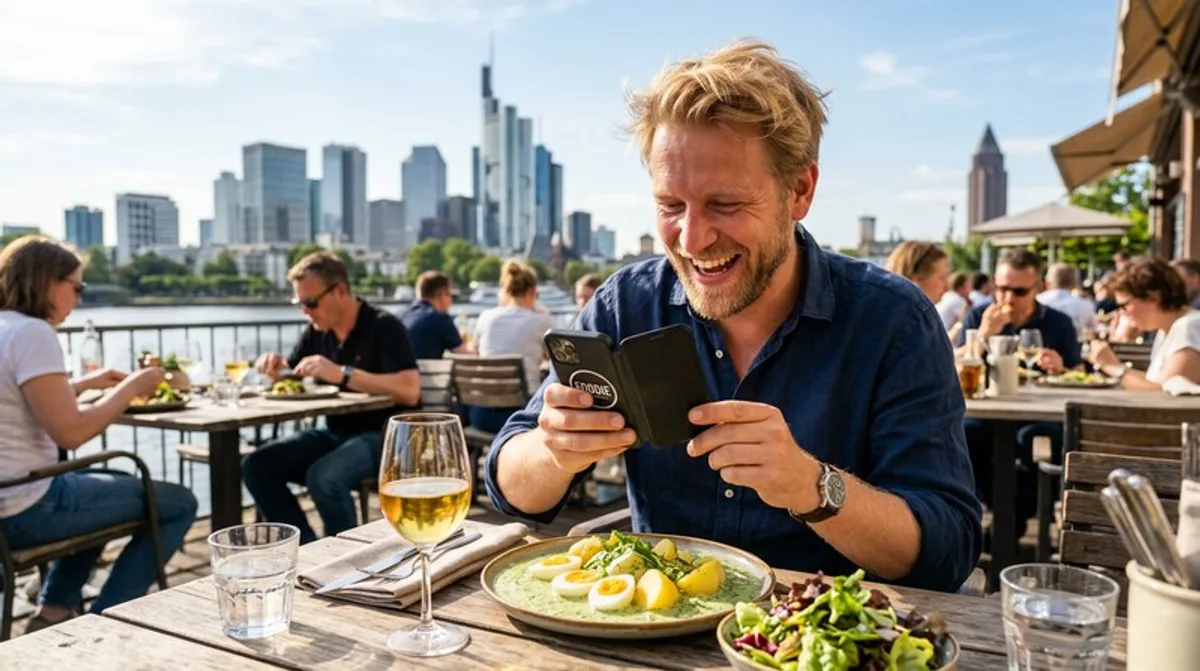
TikTok Shop's affiliate program has fundamentally altered how direct-to-consumer brands structure creator compensation. Under the affiliate model, creators earn a commission (typically 5–15%) on sales generated through their content rather than a fixed fee for posting. For brands with proven conversion economics, TikTok Shop affiliate deals reduce upfront cost exposure and align creator incentives with brand outcomes.
Rate impact: For creators in categories where TikTok Shop affiliate programs are active — beauty, apparel, home goods, supplements — the shift toward commission-based deals has suppressed flat-fee rates. Brands offering only flat fees in these categories compete against affiliate opportunities where a single viral video can generate more creator income than a typical sponsored post fee. Brands that want flat-fee commitments from TikTok creators in these niches are paying premiums of 20–40% above 2023 benchmarks to compensate for the foregone affiliate upside.
Trend 3: AI-Generated Influencer Content and Pricing Impact
Synthetic AI influencers — fully computer-generated personas with social media presences, engineered aesthetic identities, and scripted content — have grown from novelty to functional media channel for select brand categories. AI influencers have zero production scheduling constraints, zero compliance risk from creator behavior, and fully controllable content output. Brands in luxury fashion, technology, and gaming have run successful campaigns with AI creator personas.
Rate impact: AI influencers suppress rates at the lower end of the human creator market by providing brands with an always-available, fully controllable content alternative at predictable cost. However, AI influencers generate significantly lower trust and purchase intent signals compared to human creators — the authenticity premium for human creators has become more explicit as the AI alternative has made it easier to compare. Human creators with genuine community trust are therefore experiencing rate premium increases relative to the AI alternative, while creators whose value proposition is primarily production rather than authentic connection face downward pressure.
Trend 4: Creator-Owned Brands Reducing Dependency on Deals
A growing share of top-tier creators have launched their own product lines — beauty brands, supplement lines, apparel collections, food and beverage products. Creator-owned brands generate revenue independently of brand partnership deals, which structurally shifts the negotiating position of established creators. A creator who generates $2M annually from their own product line does not need brand deals the way they did when deals were their primary income source.
Rate impact: Top-tier creators with successful owned businesses have become selective about brand partnerships and are raising fees accordingly. Brands looking to work with creators at the macro and mega tier are increasingly encountering minimum deal values of $50,000–$200,000 and exclusivity restrictions that the creator's brand ownership makes more complex. The result is a bifurcation: top-tier deals are getting more expensive, while mid-tier deals have remained more accessible.
Trend 5: Long-Form YouTube Revival for Brand Deals
YouTube long-form content — videos exceeding 10 minutes and often running 15–30 minutes — is experiencing a significant viewership and brand deal revival in 2026. The mechanism is a reaction to short-form content saturation: audiences have demonstrated appetite for longer, more substantive creator content that requires genuine attention. Podcast-format YouTube content, deep-dive review channels, and educational long-form creators are seeing above-average growth in views per subscriber and brand deal volume.
Rate impact: YouTube dedicated sponsorships (full-video sponsorships as opposed to mid-roll integrations) are commanding higher rates in 2026 than at any point since 2020. Sponsors are willing to pay premiums for long-form YouTube placement because the audience watching a 20-minute video is more qualified, more attentive, and more likely to act on a recommendation than a 15-second TikTok viewer. YouTube dedicated sponsorship rates at the mid-tier (100K–500K subscribers) range from $5,000 to $20,000 in competitive niches — up from $3,000–$12,000 in 2023.
Trend 6: B2B Creator Market Expanding
Business-to-business influencer marketing has emerged as a distinct and growing market segment. LinkedIn creators, industry newsletter authors, podcast hosts in professional verticals, and YouTube channels targeting small business owners, executives, and professionals have attracted meaningful brand budgets from B2B software companies, financial services providers, and professional services firms. The B2B creator market operates differently from consumer influencer marketing: audience size is less important than audience quality, and rates per engagement are significantly higher because a B2B buyer has substantially higher lifetime value than a consumer product buyer.
Rate impact: B2B creator rates are not following consumer influencer pricing conventions. A LinkedIn creator with 30,000 engaged followers in the SaaS marketing space may charge $3,000–$8,000 per sponsored post — comparable to a consumer macro influencer with five times the follower count — because their audience's purchasing authority justifies it. B2B creator pricing is still maturing, and there is significant rate variation between creators who understand their audience value and those who are pricing against generic influencer benchmarks.
Trend 7: Creator Usage Rights Becoming Standard Contract Clause
In 2021, usage rights were a point of negotiation that many creators were not aware they should be charging for. By 2025, usage rights clauses are standard in professional creator contracts, and creators — particularly those with management representation — are pricing usage rights as a distinct line item rather than including them in the base rate.
Rate impact: Brands that previously acquired broad usage rights through vague contract language are now paying explicit usage rights premiums. A 90-day paid social whitelisting right adds 15–30% to the base creator fee. A 12-month usage right across all digital channels adds 25–50%. Perpetual rights are increasingly difficult to acquire and, when agreed, are priced at 50–100% above the base rate. Budget planning for 2026 influencer campaigns must account for usage rights as a separate cost, not an included benefit.
Trend 8: Performance-Based Pay Gaining Ground
Hybrid deal structures — combining a base flat fee with performance bonuses tied to sales, redemptions, installs, or engagement thresholds — are becoming more common in 2026, particularly in direct-response verticals. Brands pushing for accountability and creators seeking upside from high-performing content have found common ground in hybrid models.
Rate impact: Pure performance deals (zero base, commission only) remain rare outside TikTok Shop affiliate arrangements, because creators with real market value will not accept zero guaranteed compensation for content that requires production time regardless of performance. Hybrid deals typically structure as 50–70% of fair market flat fee as a base, with performance bonuses that can bring total compensation to 150–200% of the base if content performs above a specified threshold. The trend benefits both parties when set up correctly and creates misaligned incentives when the base is set too low or the performance metrics are not within the creator's control.
Platform-Specific Trends
| Platform | Key 2025 Trend | Rate Impact | Brand Priority |
|---|---|---|---|
| Reels dominating, Stories conversion focus, collab posts | Reel rates up 10–20% since 2023 | Conversion and brand aesthetics | |
| TikTok | Shop affiliate replacing flat fees in commerce niches | Flat-fee premium for non-affiliate creators in commerce verticals | Discovery and direct commerce |
| YouTube | Long-form revival, dedicated sponsorship premium | Dedicated rates up 20–30% vs 2023 | Deep product education, trust building |
| B2B creator market expanding rapidly | Premium rates for quality professional audiences | B2B lead generation and brand authority | |
| Podcast | Host-read ads sustaining strong CPM despite ad-skip technology | Rates stable to slightly up for established shows | High-trust, captive audience |
What Brands Are Paying More For in 2026
Genuine community trust, documented conversion performance history, niche audience quality over quantity, creators willing to engage with product in depth rather than surface-level mentions, long-term ambassador relationships that build consistent brand presence, and content that performs in paid amplification alongside organic posting.
What Brands Are Paying Less For in 2026
High follower counts without engagement evidence, single-platform creators without cross-platform reach, broadly aspirational lifestyle content without clear niche targeting, and one-off campaign placements without relationship continuity. The shift toward measurability and accountability in influencer marketing has made vanity metrics progressively less valuable as rate justification.
Creator Monetization Diversification
The most financially resilient creators in 2026 operate multiple revenue streams simultaneously: brand deals provide the primary income floor, affiliate commissions provide variable upside tied to content performance, platform revenue sharing (YouTube AdSense, TikTok Creator Rewards) provides passive baseline income, and memberships or subscription platforms (Patreon, Substack) provide recurring revenue from the most engaged audience segment. Creator-owned products sit at the top of the diversification pyramid for creators at scale. This diversification changes how creators value brand deal income: it is no longer the only source, which means creators can be selective in a way they could not earlier in their careers.
For rate tables across all tiers, formats and platforms, see our influencer marketing pricing guides.
Staying Ahead of Rate Inflation with Current Benchmarks
The rate increases outlined in Trend 1 and Trend 5 are happening asymmetrically — quality micro creators in competitive niches are up 15–30% while macro rates are bifurcating. The Instagram Analyzer uses current market data, not 2023 benchmarks, so running a creator through it gives you an up-to-date rate estimate that reflects the actual market rather than an outdated rate card the creator has not revised. If their quote is $1,400 and the analyzer returns $800–$1,200, the creator is within negotiable range; if the analyzer returns $400–$600, they are significantly above market.
Use the Profile Comparison Tool to benchmark multiple creators simultaneously, particularly when evaluating micro vs. macro trade-offs — it makes the engagement-efficiency comparison across tiers immediately visible.
Frequently Asked Questions
Get the market rate for any creator — free
Enter followers, niche, and content type. Get an instant benchmark with CPM equivalent and fair/high/low verdict.
Open Rate Calculator →